
UK/Canadian Singer/Songwriter Katy Hurt has been in the business for a very long time. Working hard for her career, Hurt has constantly been touring, putting out new music and is always ensuring she is keeping her socials alive. Despite being a prominent figure in the UK country music world, it is only this year that Katy Hurt has put out her debut album. Previously, she has released EP’s such as Unfinished Business and numerous singles but an album is something both Katy and her fans have been eagerly anticipating for years.
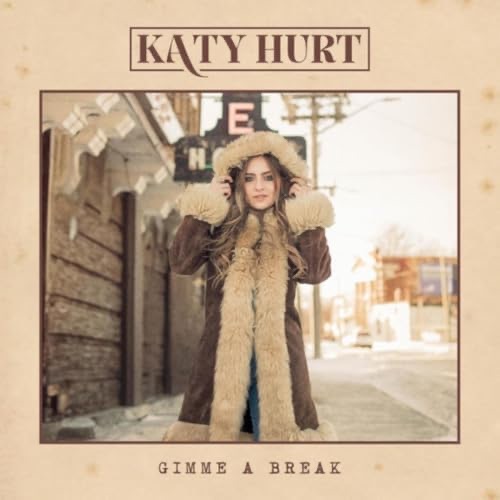
Katy Hurt’s debut album Gimme a Break was released May 23rd and you can listen and stream it here. Co-written by Hurt and Gab Zsapka, the album is produced by Murray Pulver.
Gimme A Break, much like most of Katy’s music is that of mainstream quality. Beautifully written, beautifully produced and of course beautifully sung, Katy always delivers some of the best country music the UK has to offer and we always feel she deserves that bigger spotlight. What we have noticed at festivals such as when she played the Big Feastival, is that the audience there may not necessarily be hers but after they hear her play, they are new fans for life.
We caught up with Katy to discuss her new album and why it took so long, the expense that comes with it, losing money to Pledge, the UK country scene and more!
This was one of my favourite interviews which I was very tempted to put out as an audio as was so fascinating to me. Enjoy!
Let’s talk about the album ‘Gimme A Break’ because, it’s been a long time coming…
Yeah, it’s been quite the journey. I mean, we recorded it in 2020 – in January and February of 2020. I recorded it with Murray Pulver again, the same producer that I used for the ‘Unfinished Business’ EP, so we were out in Winnipeg again, and I really, I knew that we were going to do it kind of, kind of old school approach, so I didn’t want to rush the process. So we went out to Winnipeg for about two months, and we spent like, the first week, just going over every song and every lyric and making sure that we had really considered everything. And then we had pre-production, and went in to the studio in the end, and then spent like, a couple of weeks working on the songs. And then, of course, thought it was amazing, got really excited, made all the plans for release for 2020, came home, did one show, and that was that. And then we weren’t allowed to leave the house for, you know, nearly two years. So of course, all the plans for release kind of went out the window, because without being able to do the tour that I had planned, or the shows or the promo, I didn’t really know, you know where to start, which was incredibly difficult. And at the time, I had a team, I had a booking agent and a manager, and obviously everybody’s businesses were impacted, so that all kind of, we all had to part ways just because of distance and time, you know, going two years without work. Some of them stopped being in the industry altogether, and that kind of left me feeling a bit lost. And then, you know, slowly but surely, started putting singles out and kind of testing the waters again and checking to see if anyone had, you know, remembered that we were still here, and eventually, finally, all the pieces fell into place to fully come out. But it definitely took longer than expected, and wasn’t the original plan we had in mind. But I’m really glad it’s finally out, and I think definitely was the right time to do it.
In a way, do you think the time it took has helped slightly for you to just make sure that everything was how you wanted it?
Yes and no, actually, because the actual music never changed. Everything had been finished and ready and waiting to go, from a music perspective, since the day we left the studio, but I think that’s because we had spent such a long time working on it and making sure it was right when we were there. I didn’t want it to be done remotely. I didn’t want it to be that we just sent stuff in on iPads or laptops and updated things if we weren’t sure. Because I knew if I allowed that, then I wouldn’t commit. And I really wanted it to be, no! we’ve made these choices, we have to stand by them. So the actual music part didn’t change. I think the things that definitely took longer and left me feeling, you know, like there was more thought was the artwork. That was something that I just kept going over and kept thinking I had the idea, and then not being able to book the photo shoot, well we’d book it, and then something else would happen, another lockdown, or another something. And so that kind of stuff definitely changed, and wasn’t the original intention, but yeah, everything else I stood by. And there was even the debate, you know, because so much time had passed. It was like, do we even put it out at all? But I still stand by everything on the record itself. So I knew that I would be proud to put it out without having changed it.
And why the title?
Well, it’s kind of funny. We named it that at the time, and then it kind of feels like I maybe was asking the universe for a break. That song (title song) think it just summed up so many of the frustrations across all of the tracks. I think whether you’re looking at the album through the perspective of like me chasing music, or whether you’re looking at it through the perspective of someone who’s just going through life and relationships, there is an element of frustration in the record. So I think that saying, Oh, just give me a break with whatever you’re doing kind of was a recurring theme. And I also just thought it was funny. I just think that’s such a fun song, and it’s kind of what I love about the country songs I grew up on, where there’s almost a comedic element to them. You know, when you listen to tracks from people like Brad Paisley, they’re not taking themselves too seriously and I love that. So this song is where I poke fun at, you know, all the clichés from other country lyrics, even my own. And, you know, the songs that everyone always wants to hear you sing and all that kind of stuff. It just, you know, just felt quite fitting. And I also think for a first album, because this is my first full length record, it was kind of funny to be saying, Give me my break, you know. So there was lots of different, lots of different reasons for that being chosen in the end.
What song took you the longest to write, or what was the easiest?
Oh, wow. I think they all kind of have very different stories. I mean, in terms of the easiest or quickest, the very last song we added to the album, we wrote the day before we went into the studio, which was, ‘Oh Girl’. And so I think that was the quickest in terms of turnaround, just because we literally wrote it the day before, and then we were recording it. That song is the only song on the record that has another writer on other than me, Gab or Murray, the producer, and that was Rhianna Rae Saj, and she’s an artist who’s based out in Winnipeg. And Murray had said, “I have this girl, I think you both would get along really well. We should have her around and, you know, get to know one another”. And we knew we were going into the studio, so it wasn’t really meant to be a songwriting session. It was just, “hey, let’s hang out”. And she came over, and I was telling her about a friend of mine who’d been really struggling, and I had been saying, I have this kind of basis for a song, and I think I had maybe the first verse or some of the lyrics or something, but then we all kind of just sat down and said “ there is a song here”. I was like, yeah, that definitely was missing from the record. Let’s record it.
In terms of ones that took the longest, I’m trying to think, I think ‘Sounds Good In a Bar’ had the most changes. ‘Sounds Good In a Bar’ had been a song that Gab and I had written together, and we thought we had done it. We thought it was finished. We really liked it. We were pretty confident about it and then we took it to Murray, and he was like, “No, it’s great, but something’s missing”, and it’s kind of technical, but we basically, we’d written the song in Standard Time. I think it was four, four and I went, “if you’re in the bar, you need to be able to swing your beer, you know?”. And he was like, “you just need to change the time”. So we re-wrote the chorus and the song so that it would be in a swing of three, four. Then all of a sudden it was like, “oh, it’s catchy”. Now, now it makes sense. Now you’d actually want to sing those o’s in a bar, and you can hear it, you know. So that was a pretty big change. I don’t think I’ve ever done that before. I don’t think we’ve ever written a song and then rewritten the timing of it. So, yeah, that was interesting. And I think that’s where having a producer who isn’t as precious with the songs, because, you know, when you’re a songwriter, you write them and you think that they’re as good as you can possibly make them, having that outside perspective of someone that you trust is very valuable. When you have someone that you can be like, I’m willing to take the chance on what you think might be better.
In that case, are there any songs that, it might even be that one, but any songs on the album that from writer’s room to full production, you were like, Wow, I did not know that it could sound like that?
I think. I mean, the one that blew me away the most was ‘Feather’.
I knew you were gonna say that.
Yeah, that was really interesting, because Gab and I wrote that song, and we wrote the song itself pretty fast, then Gab went away, and he composed that entire middle section, which was so new and not at all like what we’ve done before, but we just composed it for fun. We weren’t really thinking about it for the album or anything. In fact, I think at the time, we were like, this should be in a Disney movie. But when we were planning the album, and I said to Murray, I was like, Can we get a string quartet? You know, is this something we can actually do? And then we were able to get them in. Finally, hearing that come to life, hearing what Gab had written and arranged, and having it being played by strings was pretty mind blowing in terms of, like, final outcome. So, yeah, that’s the one I was. I was just most excited to hear.
I mean, I was gonna say, you need to send that to movie people. Forgive me, if you’ve already done it, but will you ever perform it live with the string quartet. Affordability is always a massive thing I know!
Yeah. I mean, I would absolutely love to play it live with the strings. We have done it live, I think twice, just acoustic guitars. We did it when we announced the release of the album. We were playing a show at the sound lounge in London, which is a venue that was the location for the ‘Sounds Good In a Bar’ music video, and we had a show there, and we thought it was the right time to finally announce when the album was going to come out. We played ‘Feather’ acoustically, but it is a tricky song to play when you don’t have the strings, and when you know that’s that middle section, I think is so important to the song, it’s definitely missing if you don’t do it. So maybe one day we’ll have a stage and a show big enough to have a string quartet.
I think that’s the kind of song that live, with a quartet, needs to be on video, so that everybody can see it.
What about the bookends? How do you decide on the open and closer? And is that an important thing to you?
Very! Yeah. I mean, we spent maybe three days just thinking about the order of the album. We had written every song title on a piece of paper, and we had them all laid out on the coffee table, and we were just rearranging them. And eventually I was like, no this, they need to be bigger. So I wrote them on bigger pieces of paper, and we pinned them to the wall, and we rearranged them, and thought about it, played all the songs in that order, saw if they, you know, flowed, if it made sense. I think a lot of it did come down to things like key. You know, you don’t want songs all in the same key or all in the same tempo next to each other. You want to take people on a bit of a journey. But, yeah, I think starting with ‘Dreamers’ made sense to me, because it kind of sets the tone for who I am and what I’ve been through and what I’ve been working on, and goals and, you know, all that kind of stuff. That is a true story I have, you know, and actually was inspired by a conversation I was having with Joey Landreth, who is actually on ‘Seasons’, which is the other end of the record, but I had been working in a gas station to save up to make the album, and doing the 5am shift because it meant that I could play shows at night. And he was like, “Well, now you can say you’ve been pumping gas in a country song”. I was like, that’s good. Okay, let’s go. So you know that starting from there made sense to me. I think we debated whether or not ‘Wish I Could Give You Up’ should be the first track. But yeah, we settled with ‘Dreamers’.
Were there any songs that didn’t make the album. I know you’d said that pretty much nothing had changed over the years. But any that nearly made it?
Yes, so when we went out and we, you know, we took every song I’d ever written, because up until that point when you’re working on your first album, everything you do is potential material for your first album. And so I think by the time we got there, obviously we had done the ‘Unfinished Buisness’ EP, and there had been songs that hadn’t made the unfinished business EP. We were like, Okay, this is definitely going on the album. I think ‘Before The Ice Melts’, is one that we had considered doing for the ‘unfinished business’ EP, but it just wasn’t quite the time. So that was one that we knew for sure. But think there was maybe 60 songs that Gab and I had written together that we took so it was a long process of trying to work out which ones. Up until the day we started recording, there was going to be 14 tracks. So there was another song, and the moment we got into the studio, it just wasn’t coming together. And it’s not to say that we won’t ever release that song, It just didn’t work in that moment in time. And so we decided to make it 13, and my birthday is the 31st and 13 has always been one of my lucky numbers. So I was happy with that. I was happy with it being 13.
How do you pick a single? It can’t be easy?
No, it’s definitely not easy. I think I have a pretty interesting approach to singles in that I wouldn’t release any song if I didn’t think that they could stand up on their own. So we’ve been pretty unconventional. I mean, songs like ‘Seasons’, which are like five minutes long, definitely not traditional single material. If you go by what the industry standards are, it’s three and a half minutes max, because it’s radio time. But I’ve always just felt like the songs should be songs that are important to me and have a story to tell at that time. And so we tried, you know, we tried starting with the one that was going to set the scene, which I think was ‘Sounds Good In a Bar’, and that’s definitely been probably the most successful on the record to date. But it’s really fun just playing around and, like, essentially showing people my personalities, you know, songs like ‘Rather Be’ which are pretty special and fun and sassy, but you have to balance that out with sweet, soft ones, like ‘Seasons’. So yeah, just try and give people a little taste of everything. I mean, we had more singles than intended because of the time it took to finally get the record out. So we ended up having eight singles, which is more than you would normally have. And actually, you’re not allowed to release more than half the album as a single if you want to be chart eligible.
that’s interesting.
So yeah, which I didn’t know until after we’d already released eight songs, which is a shame, but I think you know, having that variety over the course of the years it took for the record to come out meant that we could keep people interested and we could, we could experiment and take our time with each song and everything. So yeah, just, just a lot of trial and error.
Your fans as well, are album listeners
It works out for me that they want to listen to the whole body of work and are willing to give it, you know, the time to do that, because it would make me sad to not have people pay attention to songs like ‘All We Ever Have’, or ‘Feather’, which I think are just as important as the catchy ones, like ‘The Kiss’ but obviously less likely to be a single.
You say it took years to make the album, another thing I never considered as you’re an independent artist is the cost. I’ve seen people like Jade Helliwell who’ve put up a Crowdfunder/Kickstarter And I didn’t realize how expensive it must be to make an album. Is it really that expensive?
It totally depends on want and what you’re willing to spend money on, and where you’re willing to spend money, but it’s absolutely expensive. I think for me, it was really important to have money. The two most important places for the money to be were in the musicians and in the studio time and in giving us the the extra time in in Canada to actually work on the album then and there. I could have done that cheaper if I’d done it here in the UK, or if I’d, you know, just had people record their parts at home and send them in, but then it wouldn’t have felt like I was in a studio making an album. It would have felt like it was just a collective of people that had sent tracks to me. Then obviously marketing is the big one. So deciding how much money you’re willing to put into advertising, and obviously that budget can just keep growing, because there’s always more. I think it was really tricky, because I’m fortunate, because of the time it took. It meant that every year I was able to save and then do a single and save and then, you know, put plans towards how the whole album itself was going to come out. But of course, because it dragged out that meant that it wasn’t as easy to plan, and it wasn’t as easy to know exactly what you needed. I think, with ‘Unfinished Business’, I don’t know if you know about pledge?
Yes!
So I had done a pledge campaign for ‘Unfinished Business’, which was amazing, and we hit the target. And then the way that those campaigns often work is that you don’t actually get access to the funds until after the project has been delivered to people.
So with with pledge itself, they hold your money in an escrow account, or something of that sort. And then you deliver the album to people. So you actually have to make it, send it out, manufacture it, and then you get the money back, essentially. But of course, that means you still have to have the money in the first place. And pledge went bankrupt because it turned out someone had been embezzling the money out of all the artists account.
Oh, my Gosh!
So we had gone out to record ‘Unfinished Business’, we had, you know, paid these invoices, thinking that we were going to get that money back, and then had ordered vinyl, and had ordered CDs and had ordered merch, and then didn’t get the return.
I think I remember that now,
Yeah, and that was really heartbreaking for me, and it meant that all of a sudden you were in, you know, several 1000 pounds worth of debt when it came to doing this album, even though I knew that my fans would be willing to do another Crowdfunder, I just didn’t have it in me to got though it. I had to spend so much time paying back those debts. It made me really nervous about that. So we were lucky. We did get a grant, a small grant from Manitoba, because we were an international act coming in and hiring musicians within the state, and so they helped with that, but everything else has just been self funded. I mean, maybe in the future that other platforms will have, you know, I think everybody’s on Kickstarter now, which is a bit more what it tends to be for, like, small businesses. But obviously musicians now use it because things like pledge fell apart. So maybe it’s less of a risk, but we’ll see.
Oh, gosh, yeah, that’s sad, isn’t it? Yeah, I remember that now. I completely forgot about it
There were 1000s of musicians that lost money. I mean, I think one of the main cases was Slash, you know, from Guns ‘n’ Roses he lost 100,000. And I know that other acts on the scene, I think Elles Bailey was one, and I think she lost about 20,000 so that was a huge, huge blow to people. And of course, your fans, who’ve paid in to that, they’ve already spent their money, so they’re waiting then for you to send them a CD so you have to deliver, because it wouldn’t be fair not to. I could have turned around and just said, “Well, we’ve lost all the money. Never mind.” But then they would have spent money for no reason. So, yeah, so it is tricky. But I mean, I think this albums definitely, I haven’t got, like, a total figure for how much it cost, because it’s been such a long time, but it’s definitely going to be more than I ever planned.
How are you finding the UK country scene at the moment?
That’s an interesting one.I think it’s really fun watching it grow. But it is, you know, it definitely is a bit overwhelming to be honest. I think, with this huge influx of fans, they’re very specific, and they’re usually towards very specific people. Obviously, the pop acts that are coming in to country and are making country a more famous house, you know, making people understand what modern country is, but their version of modern country is, I would say, far more pop and more modern than even modern country fans normally would accept. So it is a bit confusing, because then you get people saying they love country, but they actually only know those four or five bignames.
But, you know, the thing is, I love the fact that it is opening people’s eyes to the genre. And I’m sure that there will be lots more events. You know, the benefit of it is that there are a lot more events that are popping up. A lot of them, a lot of the tribute acts, are doing really well. I think trying to get the audiences who love those tribute acts to understand that there are original acts that make that kind of music is tricky, you know, but at least it’s a start. And, you know, compared to where it was when I first started doing this, when I was like 11, I was playing all the country festivals across the UK, of which there were, like three, and they were reenactment, you know, Country and Western festivals. So to see the change, to understand that more and more people are liking this music, and that there are more opportunities, is, you know, it can’t be a bad thing. I think it’s just a matter of making sure that people understand that there are different types that go along with that and hoping that the audience is willing to listen.
I just came back from seeing Zach Bryan on Saturday, a lot of people were just fans of him, and weren’t necessarily country fans. It was really, really interesting because they were still dressed up in cowboy boots and hats and so on and I was talking to a couple of girls and asked who else do you like in country music? They were not really into country music.
I had that conversation a few times, and tried to explain to people, you know, the other acts that they might like if they like a certain person. Popular music is always going to be popular because it has, you know, the big record labels or the budgets, or it’s caught the public’s attention for a specific reason. There will always be people who then do deep dives into everything else, and then there will always be people that just follow the trends. What we have to hope is that the uplifting country I mean, I think I read somewhere recently that country musics had more streams last year than it ever had in its history in the UK. Something like 3 billion country music streams just in the UK. You know that is going to bring money and attention to the scene. And I think part of the problem that we’ve always faced with making country music in the UK is that we, we’ve lacked the industry level attention. There are so many acts who are incredibly talented, so many acts that are just starting out, but we, we’ve only had like two or three people that have been signed to record labels in the last decade for this genre, and that’s because the industry isn’t aware that there’s so many country fans, or that there’s so much potential. I think having these big acts come over, people like Dasha playing Summertime Ball and C2C growing every year, and all these new festivals popping up means that there’s probably going to be more booking agents, more publishers, more promoters, that are willing to invest in country because, I mean, even to this day, I still get when people ask to book us, they still say,”do you do country and Western”? And I have to explain. So I’m like, you know, Western swing is its own genre. That’s a whole separate thing. But I think there is now a divide between the people that liked Country and Western like 1950s style country music and 2000s country music. And unlike other genres like rock or jazz, which have grown in the UK at the same time as they have everywhere else, there’s a lot of catching up to do here.
Let’s talk women in the country music industry. I know in America, something like, 8% of women get played on country radio.
Yeah, I mean that that’s kind of all the basis of what ‘Rather Be’ was about. There have been so many occasions, and you kind of brush them off and you don’t take them seriously, because we, you know, all of us girls in the industry, we all go through it, so you have no choice but to just ignore it and move on and keep doing the work. But those things do build up, and they are incredibly frustrating because they do actually happen, and they are actually true, and the statistics prove every time you know, to not getting the radio play. I know in the States, it’s far worse. And it’s interesting, because there’s more female country acts in the UK than there are male. There’s more female country acts than there are duos. I’m trying to book events where you want, like a mixed lineup is actually really hard the other way here, but the women in country have, have often been the Force. I was having a conversation with someone the other day where I said, if you started naming country singers, if you went up to a stranger and said, name five country singers. Chances are they’d name more women than men. They might name Johnny Cash, but they’ll probably also name Dolly Parton, Shania Twain, you know, so the percentage of household names for country tends to lean to women, which I think is always really interesting. I think it makes sense for the genre, because it’s, it’s everyday stories, so everyday life stuff, you know, it’s family stories, it’s cheating stories, it’s your husband’s out somewhere stories, those kind of things make sense coming from a female perspective, which is really interesting. But, yeah with ‘Rather Be’ was one occasion in particular, I went into a potential booking agent meeting and obviously, when you’re an artist and you’re starting out, you just desperately want everyone to want to work with you, it’s really hard to then be discerning. But as we walked into the meeting, I had a potential manager at the time, and he was late, so I had to go in alone, and this booking agent patted me on the head and actually said, like, “You’re doing pretty well for a girl.” And I just remember sat there, like completely speechless that that had happened in real life. Did not want to work with him, and then had to try and argue my case for like, This guy isn’t gonna, he’s not gonna do the work, if that’s what he thinks. He’s not gonna take it seriously, and he’s not gonna take me seriously. So, yeah those things do happen too all over the place.
We’re built to be strong and get over things, and that’s why women write the best songs, and even in these male songs and ones that reach number one, half of the songs are written by women, anyway.
What some of yours is your family’s favourite?
Oh, that is a good question.
Well, my mum loves ‘Rather Be’. She thinks it’s really funny. My dad less so because there’s a swear word in it, although I was excited because it meant that I got the little explicit sticker on the record. But I think ‘Feather’ is probably the other one that they talk about. I know that both my parents really do love that song and have used it and listened to it a lot.
But yeah, I think, yeah, it just depends on who, who you ask. I think the guys like my my brother and the guys in the band all tend to like the rockier ones.
Is your brother musical?
No, but he does love music. He is a big fan of music. I think that’s pretty much how I got into music from the start. Was that my parents weren’t musical, but they were huge music fans. We went to shows from a very young age, and we always had music on in the house and in the car. And there was never a moment where that wasn’t, you know, supported, or there, even if none of us played, even if no one played an instrument or did any singing.
Categories: Favourites, Interviews, Introducing, Latest, UK Artists





 Building Our Own Nashville