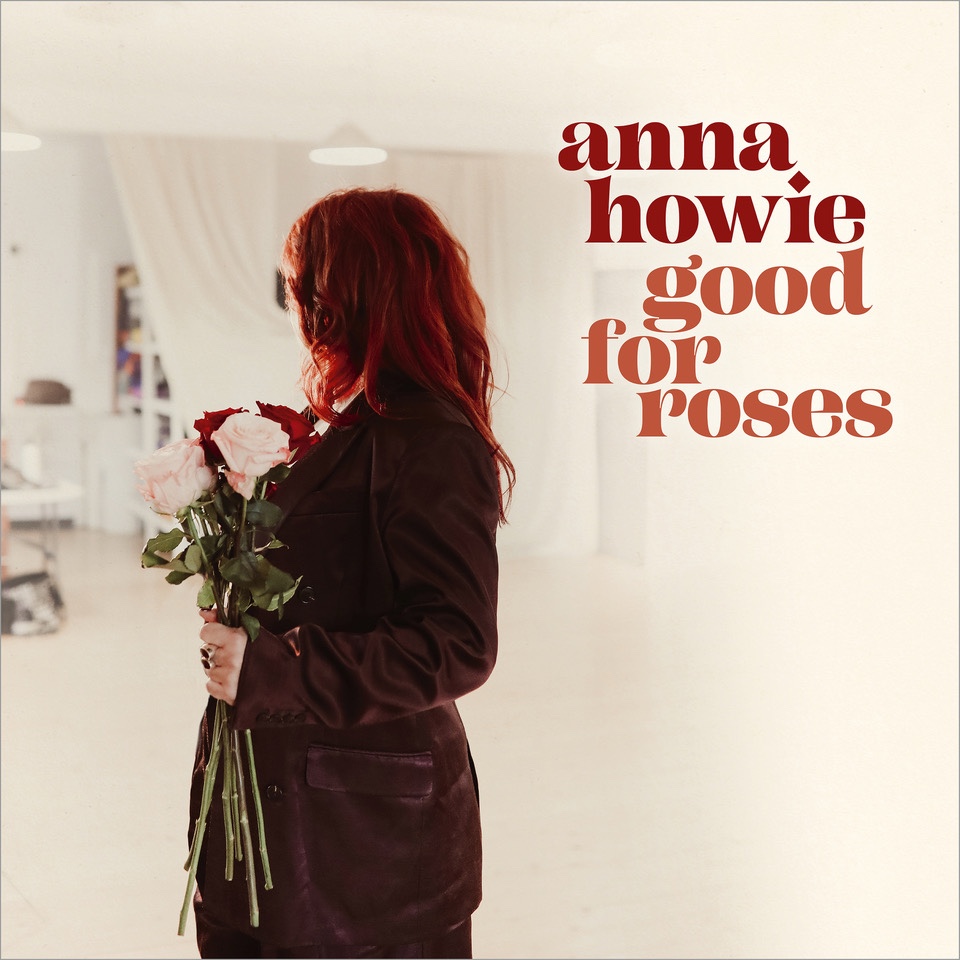
British country singer/songwriter Anna Howie is set to release her new album ‘good for roses’ on April via the Absolute Label (Universal/Sony) on 18 April. The album was recorded at Peter Gabriel’s Real World Studios, and produced by Kris Wilkinson Hughes (My Girl The River).
Having written songs in the past that are both personal and about other peoples stories, ‘good for roses’ is an album that are all lived experiences of Howie. Known more for her up tempo tracks, ‘good for roses’ delivers a great balance of her up tempo tunes but also some emotive softer ballads.
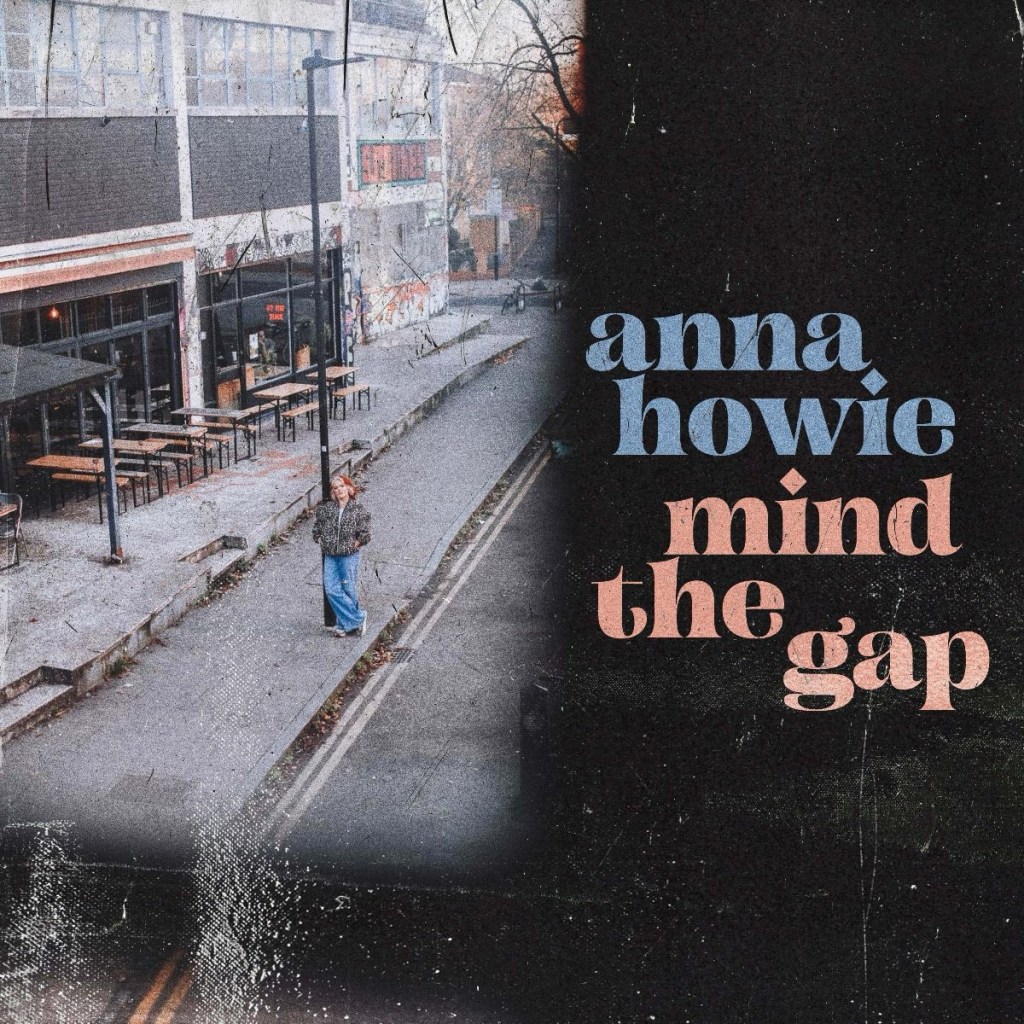
The first single from this forthcoming album, ‘Mind The Gap’ was released, 21 February 2025 and features Bella Collins. Listen here.
Anna says of the ‘Good For Roses’ album, “This is a personal one, songs about life-defining moments, good and bad mixed with songs about how I feel a lot of the time about myself and the world. If there is one thing I am sure about now I am older, it is that out of hard times good things come. There is a line in the first track on the album, Bring me Love, ‘Shit is good for roses, we just have to hold our noses on the way’. I wanted the title of this album to reflect the struggle and the joy. There is a pink rose outside my kitchen window and, as the rest of the garden dies away and there is frost on the ground, it blooms. I love its resilience.”
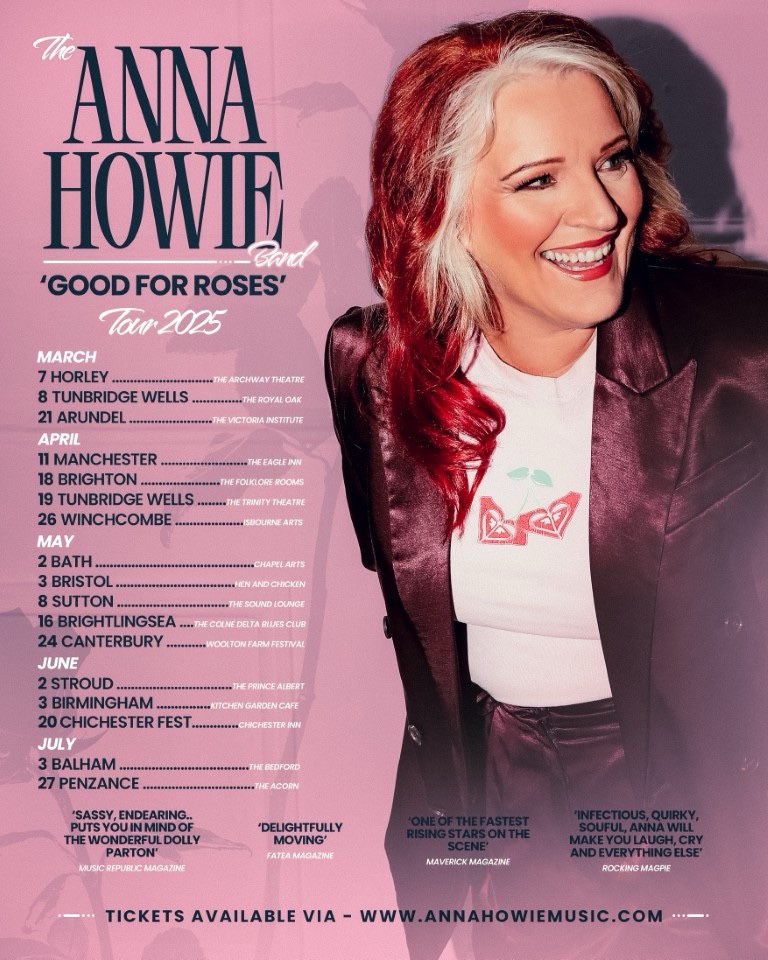
Howie is hosting an album release show at the Trinity Theatre in Tunbridge Wells on 19th April, followed by a UK Spring tour. See tour dates here.
Anna initially came to gain a lot of traction with her debut ‘The Friday Night Club’. The album was created during lockdown as part of online sessions which garnered nearly two million views! As Anna says herself, she accidentally created a community, and she has kept it with her.
Anna Howie has spent a lot of her time creating music in Nashville. In Nashville she took part in a songwriting camp with legendary writer Gretchen Peters and also recorded her EP ‘An Idiot’s Guide to Love’, which was produced by Grammy Award Winning Producer/ Guitarist Bob Britt. Anna then teamed up with producer and multi-instrumentalist Lukas Drinkwater to create ‘The Friday Night Club’.
We caught up with Anna to discuss her new album ‘good for roses’ her tour and much more!
So you’re releasing a new album in April but have already released the song ‘Mind The Gap’ – how has the response for that song been so far and what made you decide to release that track as the first single?
The response has been really lovely! You kind of never know what to expect really when you launch something out but you think “I like it and liked it when I recorded it in the studio”. It was the one my PR company wanted to release first but you always have questions in your head if it’s the best one or should I go with something more upbeat? It’s a tricky one choosing but it’s lovely having it being the one that Bella’s (Collins) on.
We (Anna and Bella) met on a writing retreat a couple of years ago and have been friends since. She came over to the studio just to say “hello” really and we kind of grabbed her and put her on a mic, and went “can you sing this?” Haha! She did and it was brilliant, so it’s lovely having this song (released first) being the one that she’s on. People’s responses are good. It’s how I feel a lot of the time, that conflict of being brave and putting yourself out there and actually just wanting to put your pyjamas on haha! I am glad we chose it.
Tell us about creating the album – is there a certain format that you work by on each release or is it a case of “whatever comes out comes out, whatever I am feeling in that moment is what will we put out there”.
So I wrote it all myself first. By the time we got in the studio, the songs were all written. I’ve not really played them live much. We did one night at a local theatre with my band where we literally just tried them out and we invited 40 people and just said “we don’t know how this is going to go, there’s going to be lots of clunky chords and lots of forgotten lyrics and all that stuff because we haven’t done them enough” but come and see anyway.
So we did a night where we just kind of got the songs out into the world a little bit and that was good. I think that really helped us. So by the time we got to the studio, I knew exactly what songs we were doing. So yeah, we just cracked on. Then, you know, we just did a song at a time and recorded them all together. Some of my band I’ve been playing with for kind of 15 years but it was the first time that we’d all got together in the studio and recorded together.
Oh, nice.
Yeah. So that was really lovely. We just had lots of fun. It was kind of just, it just felt very easy. So we just sort of did it bit by bit, we were all there for like five days. We had a few guest musicians come in as well. We had a lovely guy called Daniel McConkey who came and played saxophone. And then we had Aaron Catlow. He came and put lots of lovely fiddle up, down and, yeah, kind of did it bit by bit. But it was, it was a really lovely, was a really lovely five days.
How does that work for them when you have musicians in the studio? You’ve got your songs written, are their parts written for them, or do they just listen to a song and then just kind of like, improvise along and play there on the spot? Especially the saxophone, because the instrumentation on the album is really beautiful, and I always pay attention to that. I can’t play an instrument myself, but I do love the attention to detail of when real instruments are used instead of, perhaps just having technology.
A bit, yeah, it’s like, so I send them the songs in advance, maybe, but not a lot in advance, you know, kind of a couple of weeks, maybe. It was interesting this time, because when, when you send them, they’re very, kind of rough and ready. I played them in the front room with the band, you know, we’ve kind of done it a bit like that, but we hadn’t got any good recordings or anything. So it’s all kind of like voice notes and then I send them over.
Both Daniel and Aaron just kind of came in. They knew the basic structure of the songs, and then you have to just let them play. They’re so good, you know, that they have to kind of sort of feel their feet and just kind of play over the top, and then exactly like you said, you’d kind of pick all the bits you want to keep. They’re just both such great players that it was easy. It’s lovely to watch that as well. To kind of just see them play because it does bring your songs to life in a whole new way.
That was going to be one of my questions, do any of the songs sound completely different, from the writers room to full production to the point you are like, “Oh my God, I didn’t realize my song could sound like that?”.
Yeah. I mean, most of them, yeah. There’s a couple I suppose, that are stripped back that are very kind of similar to how they sounded when I wrote them. But others, I think the beauty of like bringing together so many great musicians is that you kind of, you need to, kind of let them have the room to breathe and to do their thing. So there are lots of bits that I still listen to now, and I think, oh yeah, I forgot that. I forgot that brilliant thing on the trumpet, or whatever it was, you know? So yeah, they do. They often sound really different.
That’s cool. What do you look for in a producer? How do you know who to work with?
Well, I’ve been really lucky with producers, actually, because I know some people who’ve not been so lucky, and I’ve kind of as much as by accident, as skill, I’ve just had some really fabulous ones. So my first one was in Nashville, and a guy called Bob Britt. He produced my first EP, and he went on to win a Grammy with another album. So that was that was great. He was fabulous. Then Lukas Drinkwater, he did the second one. We kind of very much did that out the back of lockdown. So it was like the first sort of time that we’ve been back in the world, the two of us, and we had loads of fun with that. And then this time, Kris Wilkinson Hughes produced it. She’s an artist as My Girl The River. She and I had been on tour the year before as part of the arc songwriters tour. We actually got to know each other over lockdown, through Twitter, actually. I can’t remember why, but we’d started having this chat on Twitter, and yeah, then we kind of did some zooms over lockdown, and kind of chatted about music and stuff. So we got on really well, then we went on tour, and I kind of realized as time was going on that she was just one of those people who has just got the most brilliant ears. She just kind of can hear things that I wouldn’t necessarily hear. I feel like I very much think as a songwriter and a Live Performer, she does all of that, but also she thinks very much as a producer. So she kind of hears things that I wouldn’t necessarily hear, and she understands enough about it to know how she’s going to recreate a sound she wants and stuff. So she was great. And, yeah, I’m so glad that she agreed to do it. It was lovely. I just love watching her in action. And then we had Katie May at real world, who was our engineer. So it was a real girls kind of gig. Katie May’s just won a Grammy for her engineering. So, yeah, the best, best team.
That is nice. That is nice. So when you said you wrote all the songs, you had everything ready for the studio. When you were putting the album together, how did you decide on the book ends of the album? Is it easy?
Well, No, it’s not easy. I find the order really tough, actually, because you just want to do every song justice. ‘Bring Me Love’ at the beginning – I kind of felt like that sort of set up the nature of the album. It’s got the line in it, which the album title comes from, as well. So that sort of felt like a good one to start with. I felt like it very much set the tone. Yep, and ‘Just a Little Bit of Sun’ at the end, again, the same. It felt like a good kind of positive vibe to go out on. Once my brain had landed on that, they were the two, I felt quite good about it. The bit in the middle and kind of how you go from one song to another, it’s hard work. It was hard work to get it right. You do have to give a lot of thought to that. So, yeah, we’ll see.
Yes, it makes you want to listen from start to finish. I love ‘Just a Little Bit of Sun’ being the close, because I think it ends on a very sweet note, and then it makes you want to hear the album over again. I always like it when an album closes on a more kind of, like, ballady type song. And I love to listen again, and then yeah, it’s nice.
That’s great to hear, because you are tempted sometimes to go in with a bang, or go out with a bang, to have a bang somewhere. So it was nice to just kind of like, step back and go, actually, these sort of sum up what the album’s about. Yeah. Let’s go with them.
Well, for me, I go back into the days where I was just listening to my CDs on my CD player, when I was younger and falling asleep listening to music, it was always nice to just drift off to that last nice, kind of like slow song. Then, on the odd CD, every now and then, you’d have that secret song. It always scared me, made me jump haha.
Yes hahaha I had forgotten about secret songs.
But I guess it’s not easy to do secret songs anymore on streaming really, because you’d have to track it, wouldn’t you? or you’d just put it at the end of the last track, and then you’ll probably guess, because the song will be, like, 10 minutes long.
I don’t think people hang around anymore. We used to spend more time listening, and now our brains are scheduled to move on to the next thing really fast and with everything being so easily accessible.
Yes and I actually get lyrics right now, whereas I always got lyrics wrong. And, yeah, misheard lyrics are some of my favorite things. I’m just like, I can look it up now. And, oh, is that what they’re saying? Oh, my God.
Were there any songs that you’d written as well that didn’t make the album that you wish had, but you just had enough tracks on there, or they may not necessarily quite fit?
Yeah, there’s exactly that. There’s one that we do live a lot, called ‘Wasting My Time’. We do that one a lot. It was kind of one of our most, the ones we played the most live. And yeah, it just didn’t, I don’t know what it was, I don’t know why, but we all sort of came out of the studio just saying, “Oh, I’d quite like to do that again. You know, something just didn’t quite work with it” And then, of course, we recorded 12. I could only use 11, just from time wise and so one had to go. So we’ll maybe come back to it another time. We certainly will still do it live. We still put it in.
I kind of like that, though, when you have a song that you only play live. Back in the day it happened a lot and the only way to have a copy to listen to would be on a live bootleg.
We’ll definitely keep it in and it will be, just be the one that got away.
Oh, that’s so nice. Is there a particular song on this album that you cannot wait for people to hear?
Um, do you know what? I’m really excited about people hearing all of them. I’m excited to see how they kind of live and breathe. You know, they change so much. I mean, you’ll know this, because you probably go to so many gigs, but songs change so much over the time. What you know when you start getting into it and where you kind of end up. So I’m really looking forward to kind of seeing them all and seeing where they’ll go.
‘Opera House’ is going to be really fun. It’s lovely with just the four of us. But for my album launch party, or show, whatever you want to call it, we’ve got Daniel coming back with the sax, and we’re going to have a fiddle player as well. So looking forward to all of those sounds being kind of like, really busy. There’s a lot going on in that track, I’m looking forward to recreating that for sure.
And I like doing Start Again. Start Again is really a great sing-along one. Really, kind of gives it some beans. I think it’s a bit liberating that whole kind of sing-along moment. So, yeah, I’ve done that a couple of times now, and I’m looking forward to doing that some more.
Good, good. The song that I really like at the moment is ‘Crazies For Horses’. What can you tell me about the song? Because I do like the line about “family calls are less frequent”.
Oh yeah. So Well, this was a really interesting one to write, because it’s kind of going back into my history in a way that I probably haven’t so much before. To a place where I kind of didn’t want to go. So I sort of made myself do this thing, this song, and, yeah, it’s, it’s really interesting. So it was basically about a bad relationship that I was in for a long time, for most of my teenage years, actually, way too long. To kind of get me out of it, at some point, I went to stay with an old uncle and aunt in Somerset who were farmers, and my aunt was furious with me for being in this (relationship) and not getting out of it. She was furious and she kind of kept telling me off and calling me crazy and all those kind of things. My uncle, who was a farmer, man of very few words, he would just say “crazies for horses” and I think it means, that horses are termed crazy when they act on their instincts, when they kick out, or when they bolt, or when they do anything like that. They can be a crazy horse, whereas we don’t trust our instincts. I was, at that point, was staying in something I should have run away from. So just him saying that has just stayed with me. I mean, we’re talking a long time ago. We’re talking sort of 35 years ago. So it’s a long time, and yeah, but those words have stayed with me, and I’ve always sort of planned to write a song around it, and had never quite done it. And so I’m really glad that that I have done it good, and it feels really liberating, and I’m it’s going to be interesting to see.
I’m really delighted actually, that you said that you like it. It’s going to be really interesting to see how people relate to it.
Yeah, I think you’re going to find a lot of people will have their own narrative to it as well.
That is what you hope for, to connect with someone who’s going to understand the sentiment of it and what it’s all about. I don’t want it to be a negative experience. I want it to have a sort of strength about it as well.
Well, I think, with relatability and about how sad it is, especially in the form of a song. The positivity that comes out of that is the fact that people will be like, “Thank God I’m not alone”because we spend so much time with our own thoughts, and I’m particularly bad as being an over thinker, and the relief that comes from even someone you don’t know having a similar experience is like “ yes!I’m not crazy”. But I mean, even, as you said, the crazies for horses when you were describing what it meant. I was like to be fair, whenever we as women do stick up for ourselves or shout out, we get called crazy as well.
Yeah, absolutely, absolutely right. It’s great to hear you say that. I really hope it does resonate with people. Yeah, and the other thing is, I’m always going to aim to do ‘crazies for horses’ and then ‘start again’ live together, because the two of them were chronologically in order. So I kind of literally got out of this horrible thing finally, and then went to university, and that’s what ‘start again’, is about, it’s about that moment of like being in a room, in my room, in halls, and thinking, Oh, actually, I might have had another chance here – This could be fantastic and it was. I’m gonna definitely try and aim to put those two together.
Good. I look forward to it. The next question I was going to ask, was there a song on this album that was a particular challenge to write, or took a long time? But I guess in many ways, you’re probably going to say ‘crazies for horses’, because it’s been years in the planning.
Yeah, I think it was. That one was the hardest, for sure. You have to go through the stages of it, you know, you have to, kind of think, I am going to do this; I am A) going to write the song, and B) talk about it, because you can’t not so, you know, you kind of got to take that link, so that’s the first bit, and then kind of getting it on paper in a way that you think is truthful and represents kind of the time and all of that sort of thing, that’s quite tricky. It kind of feels unnatural I suppose to go back to times that are tricky, all of my senses were not to do that. I kind of had to fight myself on that one and think, “Oh, actually, I think it will be good”. And, yeah, I’m really pleased with it. And I love the way it is on the album. I love the herring on the piano. I just think some of those piano bits he’s put down there are just kind of fantastic.
Let’s talk about the tour, because obviously, I know that you’re coming to Stroud, but you’ve got quite a few numbers of places that you’re playing. How do you know where to play? How do you choose which places you’re going to play?
Some of them are places I’ve played at before and loved so really looking forward to going back. They’re kind of the obvious ones. Yeah. Then other ones, you kind of just have to sort of sell yourself as a new person. I mean, we’re going to lots of cities this time that I’ve never played in before, and then it really is a question of, kind of just trying to make that contact and find a place that you know is sort of the right size and have the right vibe, and all of that, that sort of thing. And then just asking them, you know, can I come please, and play here?
Anna Howie will be out on tour from April 11th – tour info here
‘good for roses’ is out April 18th.
Categories: Favourites, Interviews, Introducing, Latest, UK Artists





 Building Our Own Nashville